
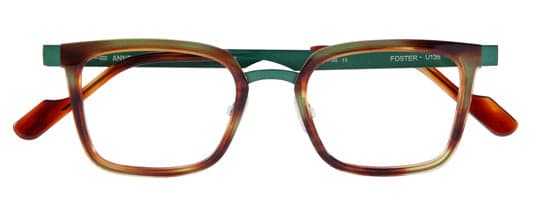
Honey, cognac, and amber tortoise can look nearly identical in a tray, but on a warm or olive complexion they read very differently. Often the best choice is the one you'd least expect. Here's how to tell them apart.
Quick Answer: Which Warm Tortoise Should You Reach For?
Reach for cognac first. It is the mid-tone shade that photographs as "intentional" rather than defensive, which matters more than people realize when you're the one wearing frames every day. Honey works when the rest of your wardrobe runs soft — camel coats, oatmeal knits, tobacco suede boots. Amber is the autumn frame you choose for a reason, usually with an outfit that can carry the saturation. Deep tobacco brown, chocolate, burnt umber, olive green, rust, and terracotta all belong in the same warm-fall tint family, but tortoise is the shape this conversation keeps coming back to.
Defining Warm Skin (Without Oversimplifying)
Warm skin carries gold, olive, or yellow undertones underneath whatever surface complexion you have. The tell most stylists cite is the wrist vein test: green veins in natural light suggest warm, blue or purple suggest cool. Gold jewelry tends to flatter warm skin more than silver. Warm undertones show up across Mediterranean, South Asian, Latin, African, and Central and South American heritage, and they read warm regardless of how light or deep the complexion itself sits on the spectrum. For a deeper treatment of the underlying color theory, see my earlier post on choosing frames for your skin tone.
The Three Warm Tortoises, Pulled Apart
At the fitting counter I keep these three shades physically separated in the tray. They look identical to someone who hasn't stared at acetate for twenty years. They aren't.
Honey
Honey tortoise reads amber-yellow first, with pale caramel or buttery cream as the background. It is the lightest of the three. Put honey on warm-olive skin and the whole face softens — it's the frame equivalent of a cashmere scarf. Honey is casual by default. It tends to disappear under harsh fluorescents, which is why store lighting can lie about how it actually looks in daylight.
Cognac
Cognac is the workhorse. True orange-brown with medium saturation, a pattern that holds up in photos whether you're in a black turtleneck or a camel blazer. I tell warm-skinned clients: if you are buying one tortoise this fall, buy cognac. Honey is prettier at first glance, amber is more dramatic, but cognac is the frame that will feel right in January when you've given up on seasonal dressing and just want something that works.
Amber
Amber runs deep — orange bleeding into chocolate, sometimes with near-black sections. Amber is the frame you wear with intent. It pairs with black tailoring, brown leather, and rust knits, and it flatters deep warm complexions especially well. Amber also has a confidence threshold. If you're not sure, you'll feel it. That hesitation shows up in how you wear the frame, which is why I nudge unsure clients toward cognac first.
Comparison Table: Matching Warm Tortoise to Occasion
| Tint Name | Skin Match | Frame Examples | Best For (occasion) |
|---|---|---|---|
| Honey | Light-to-medium warm, olive | Anne et Valentin honey acetate blends, Gazal "Wicked" honey variant | Weekend wear, soft-palette outfits, daytime photography |
| Cognac | All warm complexions (most versatile) | Jacques Marie Mage cognac, Anne et Valentin Toulouse cognac, Gazal "Wicked" cognac | Office, travel, everyday rotation |
| Amber | Medium-to-deep warm | Jacques Marie Mage amber, Gazal "Wicked" amber | Evening, statement outfits, formal-adjacent |
| Deep tobacco brown | Medium-to-deep warm | Various Italian-made acetates | When tortoise feels too busy |
| Olive green | Olive-warm specifically | Anne et Valentin olive | Tweed, denim, earthy layering |
| Rust / terracotta | Warm across the range | Accent frames | When you want color, not pattern |
Designers Doing Warm Tortoise Well
Three houses consistently come up in the fitting room when warm-skinned clients ask "who actually gets this right?"
Anne et Valentin works honey and cognac territory particularly well. Their Toulouse-designed acetate blends use layered color rather than the flat two-tone patterns you see in budget tortoise, and the effect reads expensive without looking fussy.
Jacques Marie Mage runs thicker acetate than most, LA-made, and their cognac and amber tortoises have visible depth — you can see the pattern changing as the light moves. JMM frames photograph well, which is part of why collectors gravitate to them.
Gazal Eyewear's "Wicked" collection includes three tortoise variants that map almost exactly onto honey, cognac, and amber — which is useful if you want to try all three side by side without cross-shopping brands.
What to Avoid on Warm Skin
Pure cool-tone tortoises — the gray-brown patterns sold as "black tortoise" with no red or orange in the mix — flatten warm complexions. Pure ash or stone gray does the same, as does silver-toned metal against warm skin. None of this is a hard ban. But if you're deciding between two frames and one is cool-base and one is warm-base, the warm-base frame will almost always photograph better on you.
The Mid-Tone Opinion
Here's my strong take, and I'll stand by it: the instinct for warm-skinned wearers to reach for the darkest tortoise is usually wrong. Dark amber feels "safe" because it reads as serious, but on most warm complexions it actually fights the face by competing with the warmth in the skin. Mid-tone cognac photographs better and — more importantly — reads as intentional rather than defensive. The patient at the counter last October picked cognac after trying all three. She looked at the mirror for about four seconds, then nodded.
For a cooler-undertone counterpoint, see the tortoise acetate guide for cool-tone skin.
Where to Try Them
- Gazal Eyecare in Roswell, GA — full "Wicked" tortoise range, Anne et Valentin, Jacques Marie Mage
- Old Town Optique in Columbus, GA — strong independent tortoise selection, good natural lighting on the fitting counter
- Seaview Optical in Delray Beach, FL — JMM and boutique acetate inventory worth the trip
The Bottom Line
Warm skin tones have more tortoise options than any other undertone, and fall is the season the acetate industry builds around. Start with cognac, add honey for softer days, and save amber for the outfits that can handle it. If you're between two shades, go mid-tone — it will work harder across more of your wardrobe. Looking to try the honey-cognac-amber trio in person? Find a View Eyewear boutique near you and ask to see the warm-tortoise tray.
Frequently Asked Questions
How do I know if I have warm skin undertones?
Check the veins on the inside of your wrist in natural daylight. If they read green rather than blue or purple, you lean warm. Gold jewelry flattering you more than silver is the second tell. Warm undertones are common in Mediterranean, South Asian, Latin, African, and Central and South American heritage.
What is the difference between honey, cognac, and amber tortoise?
Honey is the lightest, with amber-yellow dominant and pale caramel backgrounds. Cognac sits in the middle — a true orange-brown with mid saturation. Amber is the darkest of the three, running from deep orange into chocolate. All three read warm, but they behave very differently in photographs and under store lighting.
Is black tortoise okay on warm skin?
Usually no. Most black tortoise patterns are built on a cool gray-brown base with no red or orange in the pattern, which pulls color out of warm complexions. If you want darker drama, reach for deep amber or a tobacco-brown acetate instead. The warmth in the base color matters more than the overall darkness.
Which tortoise is most versatile for warm skin in fall?
Cognac. It reads polished next to camel, olive, and rust, but it also holds up against cooler winter layering like charcoal wool and indigo denim. Honey is softer and more casual, amber is richer and more formal. Cognac threads the needle, which is why it keeps ending up in my top pick for warm-skinned clients.
Newsletter
Independent eyewear, in your inbox
Monthly stories on the world's finest independent eyewear brands and boutiques.
Related Reading
Best Tortoise Acetate Frames for Cool-Tone Skin
Most tortoise eyewear is designed for warm-tone skin. A curated guide to tortoise frames that actually flatter cool-tone (pink, blue, or neutral-undertone) skin.
Finding Your Color Season for Eyewear — A Practical Guide
Personal color analysis (the "seasons" system) applied to eyewear — how to use it without turning frame shopping into a whole personal styling project.
Frame Colors That Flatter Gray and Silver Hair
Gray and silver hair changes how frame color reads against your face — here's what actually complements it instead of competing with it.
Comments
0 comments · moderated
No comments yet. Be the first to weigh in.