
Quick Answer: The One Difference That Decides It
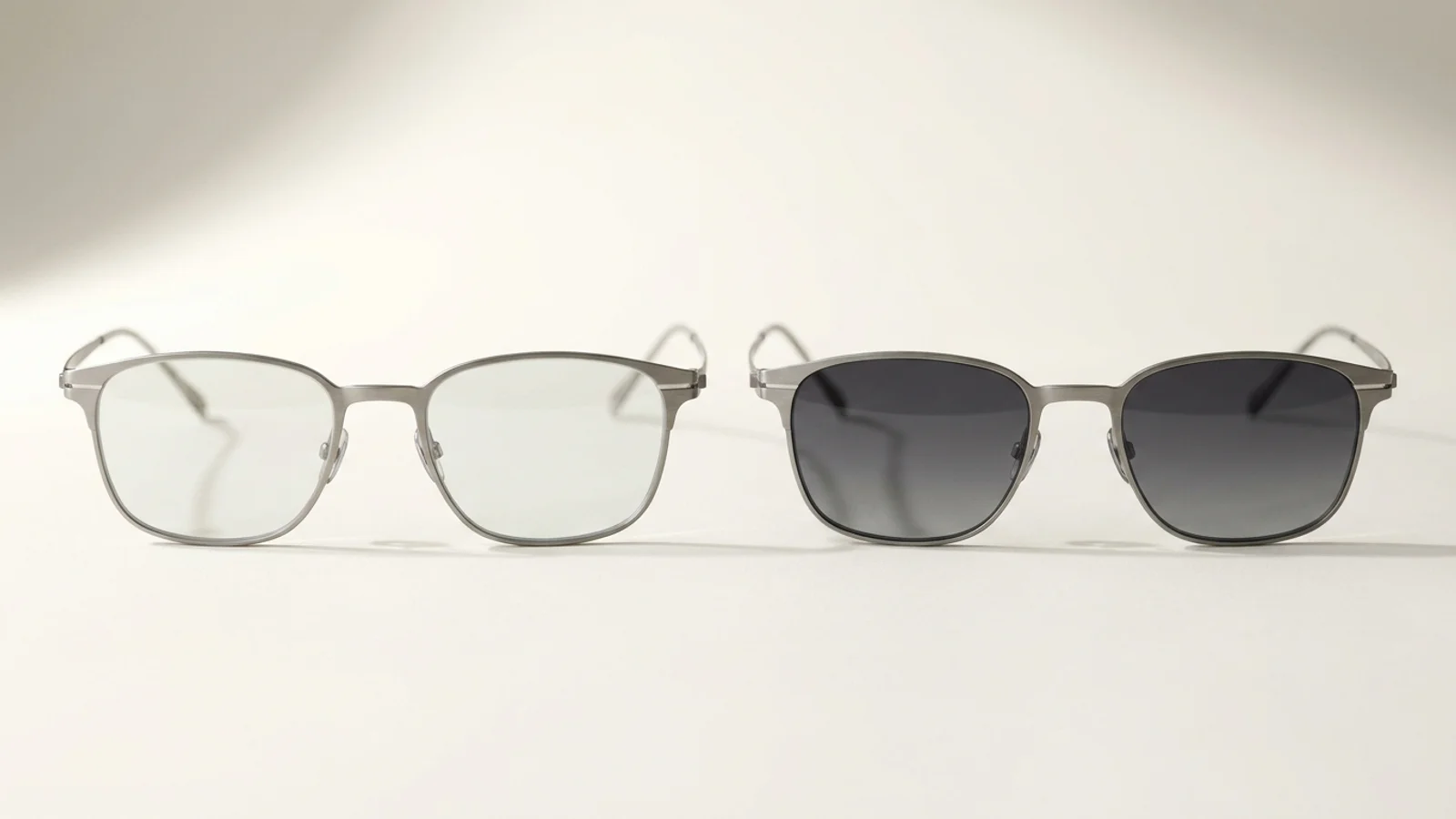
Both lenses darken in the sun and clear indoors. The fork is how they're triggered. Hoya Sensity 2 reacts mainly to ultraviolet light; Sensity Dark also responds to visible light. Transitions XTRActive reacts to UV and visible light. Car windshields block almost all UV — that's deliberate, it protects your skin — so a mainly UV-driven lens like Sensity 2 barely reacts while you drive. XTRActive does, because visible light pours through the glass regardless.
Why does that matter beyond the car? Because the same visible-light sensitivity that lets XTRActive darken on the highway is also why it never goes fully clear indoors. There's no free lunch in photochromic chemistry. You're choosing which compromise you'd rather live with: a faint tint indoors all day (XTRActive), or clear lenses on a sunny commute (Sensity). Honestly, most people, once they understand the trade, know within ten seconds which camp they're in.
Behind the Windshield: XTRActive, Full Stop
If you drive a lot in bright conditions and want one pair to handle it, XTRActive is the lens. It activates to a solid Category-2 tint behind glass — not full-sunglass dark, but genuinely useful. Transitions rates XTRActive New Generation at Category 2 behind a windshield.
Sensity in the same car? Sensity 2 stays nearly clear; Sensity Dark darkens somewhat because it also responds to visible light. That isn't a defect and it isn't Hoya doing it wrong — a mainly UV-driven photochromic in a UV-blocking box has little to react to. If someone expects full sunglass darkness in the car from Sensity, the fix is education, not a remake: Sensity was never built mainly for that job.
Indoors and Fade-Back: Sensity Takes Both
Now the rest of your waking hours. Sensity's indoor clear state is noticeably cleaner than XTRActive's — closer to an untreated lens — because it doesn't carry the residual visible-light tint XTRActive needs. For a patient whose complaint is "my photochromics look tinted in the office," Sensity is the upgrade, every time.
Fade-back follows the same pattern. Sensity clears in about 3-5 minutes from full dark; XTRActive takes 5-7, the slowest in the mainstream category. If you cycle indoors and out several times an hour — a teacher, a nurse, a real-estate agent doing showings — those extra two minutes of looking faintly sinister add up. Sensity gets you back to clear sooner.
One nice Sensity option: Sensity Shine, Hoya's photochromic lens with a built-in light flash-mirror finish. On aviators and pilot shapes it looks genuinely sharp.
Comparison Table
| Spec | Hoya Sensity Dark / Sensity 2 | Transitions XTRActive New Gen |
|---|---|---|
| Trigger | Mainly UV (Sensity Dark also visible light) | UV + visible light |
| Behind a windshield | Sensity 2 nearly clear; Sensity Dark somewhat | Yes — meaningful Category-2 |
| Activation time | 25-40 sec | 25-30 sec |
| Fade-back to clear | 3-5 min | 5-7 min |
| Indoor clear state | Cleaner, near-untreated | Permanent 7-10% residual tint |
| Max outdoor darkness | Category 3 | Category 3 |
| Colors | Gray, brown, green, silver mirror (Shine) | Gray, brown, green |
| Retail surcharge | $120-$200 | $150-$250 |
The Heat Caveat That Applies to Both
Neither lens escapes the heat problem. Above about 80°F the reaction that drives a photochromic back to clear starts outpacing the UV (or visible light) driving it dark, so the lens never reaches full Category-3. Expect the same lens to run lighter on a hot afternoon than on a cool morning. If you're in Phoenix or Miami, set expectations for both brands: you'll see maximum darkness in winter, not in August.
So Which One? An Honest Recommendation
Drive a lot in the sun and refuse to carry a second pair? XTRActive, and make peace with the faint indoor tint. Spend your day moving in and out of buildings and want lenses that actually look clear at your desk? Sensity, and keep a dedicated sunglass in the car for glare. There's no universally "better" lens here — there's the lens that matches how you actually spend your day.
And the honest aside I give every patient: if you'll commit to carrying real prescription sunglasses, a dedicated polarized pair beats either photochromic on the one metric that matters most in bright sun — getting dark enough. Gazal Eyewear's acetate sun shapes are a good place to start that conversation, and a dedicated second pair often solves the "driving" problem more completely than spending up to XTRActive.
Related Reading
For the full field — including Zeiss PhotoFusion X and Transitions Gen 8 — see the Photochromic Lens Guide: Transitions vs Sensity vs PhotoFusion. If you're choosing a lens brand more broadly, the Zeiss vs Essilor vs Hoya comparison covers progressives and coatings across the same three labs.
Where to Try Them
A two-minute UV-torch demo on the dispensary counter tells you more than any spec sheet. Three View Eyewear boutiques that stock both brands:
- Gazal Eyecare in Roswell, GA — Transitions XTRActive and Hoya Sensity demo kits side by side; ask for the windshield-glass test, not just the torch.
- Bixby Eye Center in Peoria, IL — strong Hoya presence, including Sensity Shine mirror finishes.
- Edward Beiner in Miami, FL — the real Florida heat test, in real time, with honest summer-performance talk.
For the dedicated-sunglass route, the Maui Jim designer page is the polarized reference point.
The Bottom Line
Hoya Sensity vs Transitions XTRActive isn't close once you name your priority. Driving glare is the whole ballgame for XTRActive, and it's the one thing Sensity does least well. Everything else — indoor clarity, fade speed, price, a mirror option — leans Sensity. Pick XTRActive for the car and accept the tint; pick Sensity for clean all-day wear and keep a sunglass handy. Both top out around Category 3 outdoors and both fade in the heat, so set summer expectations either way.
Want to see both react under a real UV light before you decide? Find a View Eyewear boutique near you.
Frequently Asked Questions
Does Hoya Sensity work behind a windshield?
Partly, depending on the version. Sensity 2 activates mainly with UV and stays nearly clear behind a windshield; Sensity Dark also responds to visible light and darkens somewhat in the car. For maximum in-car darkening, Transitions XTRActive is typically recommended.
Is Transitions XTRActive clear indoors?
Not fully. XTRActive carries a permanent 7-10% base tint so it can react to visible light, which means it reads as a faint gray indoors. Hoya Sensity gets noticeably closer to a true clear lens inside. If a clean indoor look matters most, Sensity wins; if windshield darkening matters most, accept XTRActive's residual tint.
Which fades back to clear faster, Sensity or XTRActive?
Hoya Sensity. It clears in roughly 3-5 minutes from full dark, while XTRActive takes about 5-7 minutes — the slowest fade in the mainstream photochromic category. XTRActive trades fade speed for its ability to darken while driving. Cold weather speeds both up; summer heat slows them down.
Which is cheaper, Hoya Sensity or Transitions XTRActive?
Sensity, usually. At independent practices Sensity runs about $120-$200 over a clear lens, while XTRActive runs $150-$250. XTRActive sits near the top of the photochromic range because of its visible-light technology.
Newsletter
Independent eyewear, in your inbox
Monthly stories on the world's finest independent eyewear brands and boutiques.
Related Reading
Photochromic Lenses: Transitions vs Sensity vs PhotoFusion
Transitions Gen 8 vs XTRActive vs Hoya Sensity vs Zeiss PhotoFusion X. Speed, fade time, windshield activation, and pricing compared.
Transitions Gen S vs Zeiss PhotoFusion X — Which Photochromic Fades Back Faster
Zeiss PhotoFusion X activates in 20-25 seconds and fades back in 2-3 minutes, the fastest published fade time in the category. Transitions Gen S trades some of that speed for more color options. Here's how they actually compare.
Hoya Blue Light Lenses vs Zeiss BlueGuard: Which Wins?
Zeiss BlueGuard absorbs up to about 40% of blue light. Compare Hoya Recharge and BlueGuard pricing at your optician. An optician's honest comparison and verdict.
Comments
0 comments · moderated
No comments yet. Be the first to weigh in.