
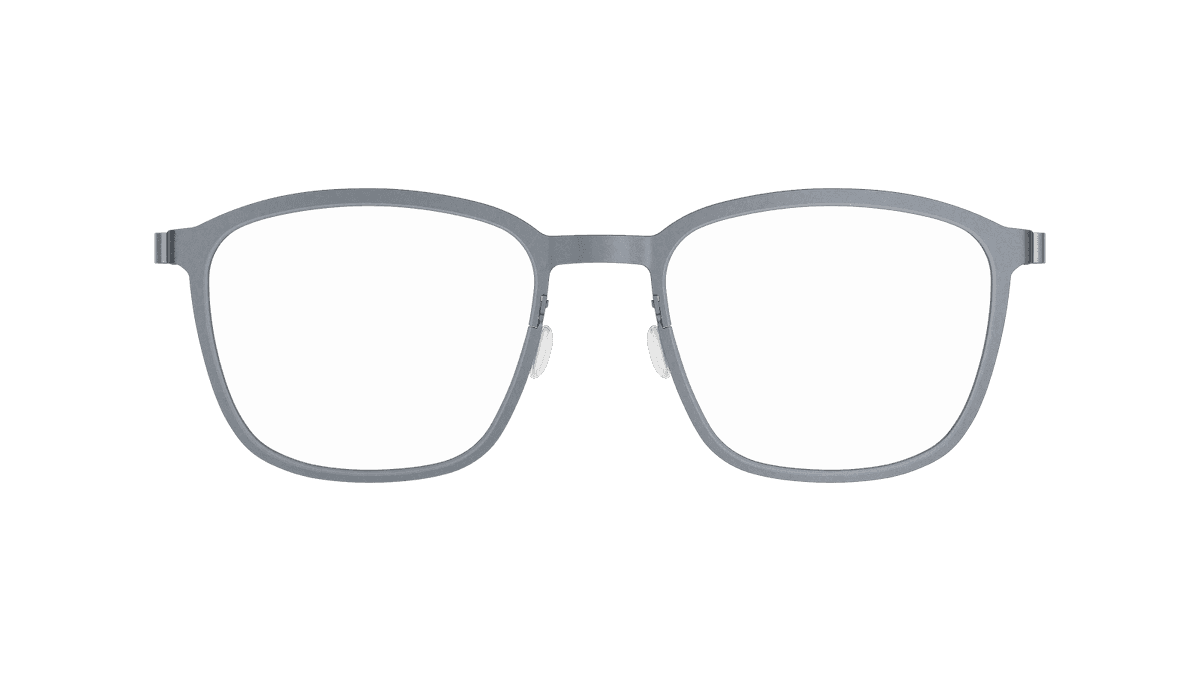
Most titanium frames priced under $1,000 are not as good as the marketing claims. Many titanium frames priced over $1,500 are not as good as the marketing charges for. The sweet spot — where you're actually getting well-made titanium with real design authorship — sits between $500 and $950. Here's the honest map.
Quick Answer — where real titanium luxury actually starts
Structural titanium eyewear with honest engineering begins around $450-$600 retail, not $200. Below that price, "titanium" often means an alloy or a thin titanium coating over a base metal core. Between roughly $400 and $950 you can buy genuinely excellent titanium frames from Lindberg, Akoni, Goetti, and Orgreen. Above $1,200 the extra money buys finish work, custom colorways, and limited-run hand finishing — not better structural material. The middle tier is where value concentrates.
What "titanium" actually means in eyewear
Three different things, and frame brands are rarely explicit about which one.
Pure titanium is the most expensive and the rarest. Commercially-pure grades (CP1 through CP4) are used sparingly because pure titanium is harder to form into thin eyewear geometry. When you see "pure titanium" on a spec sheet, it's usually referring to small components — end pieces, nose pads, temple tips — not the full frame.
Beta titanium is a flexible titanium alloy that's become the workhorse of premium eyewear. It's the material behind most of the frames that feel genuinely weightless. Beta titanium bends without memory loss, resists corrosion in sweat and salt air, and holds adjustments well. This is what you're actually buying when you buy a "titanium" frame from Lindberg or Akoni.
Titanium alloys are the gray zone. The word "titanium" on a budget frame usually means an alloy blended with stainless steel, aluminum, or nickel. The corrosion resistance drops. The weight climbs. The flex and adjustability become closer to steel than titanium. The frame is not a lie, exactly, but it's not what a knowledgeable buyer thinks they're paying for.
Honestly, most boutique opticians I respect will tell you the same thing privately: the word "titanium" on a spec sheet is not enough. Ask the grade. If the answer is vague, treat it as alloy and price it accordingly.
Four brands delivering real titanium under $1,000
Ranked by craft per dollar, not by name recognition.
1. Lindberg Air Titanium Rim — $650-$850
Made in Aarhus, Denmark. Sub-3g weight is typical — most full optical frames in the Air Titanium Rim line weigh between 1.9g and 2.9g. The screwless hinge eliminates the weight and failure point of traditional hinge screws. Custom sizing is available at 7-10 days lead through authorized boutiques.
Lindberg is the safest first luxury purchase in eyewear. I'll stand by that opinion. If a patient wants titanium and I don't know their lifestyle or style preferences, Lindberg at $650-$800 is the right default in most cases.
2. Akoni Wise / Iris / Swift — about $650-$900
Japanese-made titanium. Akoni was founded by Rosario Toscano (former DITA global managing director) and Salma Rachid; DITA founders Jeff Solorio and John Juniper have collaborated with it on design. The geometry is architectural rather than cinematic, and the titanium is the real structural material in these frames, not a trim accent.
The Wise is the single most-requested Akoni in our practice. The Iris suits more refined or professional looks. The Swift fits narrower faces. The Iris runs roughly $615-$665 and the Wise and Swift roughly $775-$910, all with genuine Japanese-titanium craft.
More background in our full Akoni spotlight.
3. Goetti — about $420-$580
Swiss-made, restrained in design, engineered for long-term wear. Goetti is quieter than the other brands on this list — less visible branding, fewer trend-driven silhouettes, a small catalog. The brand appeals to customers who want titanium quality without any hint of fashion-forward styling.
Long-term wear is where Goetti really distinguishes itself. I've seen 8-year-old Goetti frames come back for adjustment in perfect structural shape. The Swiss finishing holds up. The hinges don't develop slop. For a professional who wants one pair to last a decade, Goetti is underrated.
4. Orgreen — roughly $500-$575
Danish brand known for its color work on titanium — the reason opticians who carry the brand become evangelists. Frames generally run around $500-$575 at U.S. opticians, with some from about $313.
Fewer boutiques stock Orgreen than the other brands on this list, which is part of the appeal for customers who want something their neighbors haven't seen.
A steel alternative: ic! berlin — $500-$720
ic! berlin is often grouped with titanium brands, but most of its frames are made from stainless spring steel, not titanium. The Berlin brand is known for its screwless hinge and a design language that's genuinely different from the Danish or Japanese schools. If you want screwless construction and that look, it's worth trying; just don't buy it as a titanium frame. Typical U.S. retail is about $500-$720.
Comparison table
| Brand | Price Range | Titanium Type | Origin | Weight | Signature Feature |
|---|---|---|---|---|---|
| Lindberg Air Titanium Rim | $650-$850 | Beta titanium | Aarhus, Denmark | 1.9-3.0g | Screwless hinge, custom sizing |
| Akoni | About $650-$900 | Japanese titanium | Made in Japan | 15-22g | Architectural geometry, founded by an ex-DITA executive |
| Goetti | About $420-$580 | Beta titanium | Switzerland | 10-18g | Long-term durability, restrained design |
| Orgreen | About $500-$575 | Titanium | Denmark | 10-18g | Color work |
| ic! berlin (not titanium) | About $500-$720 | Stainless spring steel | Berlin, Germany | — | Screwless hinge |
Skip these at this price tier
"Titanium" frames under $300. Often alloy or plated metal. The weightlessness claim doesn't hold up. You'll get a frame that weighs 25-35g, corrodes at the hinge within 18 months in a humid climate, and can't be adjusted without cracking the plating. The price tells you what the material is.
Designer fashion frames with a titanium nose piece. The body of the frame is acetate; the titanium is a trim accent on a small part of the product. You're paying a titanium premium on a part of the frame that could be steel without changing anything about the experience. Judge those frames on their acetate quality instead — because that's what you're really buying.
What you get at $500-$950 — and what you don't
What's included at this tier:
Real structural titanium — either pure or beta, doing the load-bearing work. Proper hinge engineering — spring hinges, screwless designs, or jewelry-grade screws that don't strip at the first adjustment. Surface treatment that lasts — anodization or PVD plating that will still look intact at the 10-year mark if the frame is cared for.
What pushes you above $1,200:
Custom anodized colorways — some Lindberg seasonal runs. Horn or gold accents — Lindberg's Precious line is the clearest example. Hand-adjusted limited runs — workshops like Lesca Tournage produce small batches where individual adjustment by a master craftsman accounts for the price difference. If those specifics matter to you, the premium is real. If they don't, you're paying for story, not material.
A note on Gazal Eyewear
We stock both Lindberg and Akoni at our Roswell location because those are the two brands we feel comfortable putting on any face walking into the practice. Both deliver honest titanium in the roughly $650-$900 range. Gazal's take on titanium: don't oversell exotic material; help the customer find the frame they'll still love in year five.
Where to try them
A few boutiques across the country that carry a deep rotation of the brands covered here:
- Gazal Eyecare in Roswell, Georgia — Lindberg and Akoni rotating inventory.
- Eyewear on the Square in Crown Point, Indiana — strong ic!Berlin and Goetti selection, independent Midwest boutique.
- Silver Lining Opticians in New York, NY — broader European titanium rotation including Orgreen.
Designer pages for deeper brand context: Lindberg and Akoni. For our full brand-by-brand boutique rotation, the boutique practice locator filters by brand and city. And if you want to go even deeper on one of the benchmarks here, our Lindberg spotlight covers the Danish titanium benchmark in detail.
The bottom line
Titanium under $1,000 is a real category, and the sweet spot is tighter than most marketing suggests. Between roughly $400 and $950 you get genuine structural titanium from four brands worth knowing: Lindberg, Akoni, Goetti, and Orgreen, with ic! berlin as a steel alternative. Below $300 you get alloy with marketing. Above $1,200 you get finish work and story, which is worth the money only for specific features. If you're making a first luxury titanium purchase and you want one clean recommendation, start with Lindberg Air Titanium Rim at $650-$800 — it's the safest bet in the category. Find a boutique that carries these brands and spend an afternoon trying frames in person. Titanium rewards the try-on.
Frequently Asked Questions
What does 'titanium' actually mean on a frame spec sheet?
Three different things. Pure titanium is the most expensive and rare — fully commercially-pure grades. Beta titanium is a flexible alloy, the most common in genuine premium eyewear. Titanium alloys vary widely in titanium content, often blended with stainless steel or aluminum. The word alone tells you nothing; you need the grade.
Are titanium frames under $300 real titanium?
Rarely structurally. They're usually alloys, sometimes with a titanium-plated surface over a base metal core. You won't get the weightlessness or corrosion resistance the marketing promises. If the weight is over 25g and the price is under $300, assume alloy.
Why is Lindberg so light compared to other titanium brands?
Lindberg engineers around weight as the core design constraint. The Air Titanium Rim uses thin titanium with a screwless hinge that eliminates screw bulk. Many models weigh under 3 g, and the Spirit comes in at 1.9 g. Most other titanium frames are noticeably heavier. Lindberg is an outlier by design, not a marketing claim.
Is paying over $1,000 for titanium ever worth it?
Yes, but only for specific features: custom anodized colorways, Lindberg's Precious line with horn or gold accents, or hand-adjusted limited runs from workshops like Lesca Tournage. If those specifics don't matter to you, the $500-$950 tier delivers the same structural titanium for less.
Is a designer frame with a 'titanium nose piece' worth the premium?
No. If the body of the frame is acetate and only the nose bridge or trim is titanium, you're paying a titanium premium on a small part of the frame. The weight, durability, and corrosion resistance advantages of titanium don't transfer to a primarily acetate frame. Judge those frames on their acetate quality, not the titanium accent.
Newsletter
Independent eyewear, in your inbox
Monthly stories on the world's finest independent eyewear brands and boutiques.
Related Reading
Titanium vs Acetate Glasses Frames: Weight, Comfort, Style
Titanium frames are lighter and more flexible than acetate — acetate offers deeper color and warmth instead. Here's how the two actually compare.
Lindberg Spotlight: Why Danish Titanium Became the Industry Benchmark
A deep look at Lindberg eyewear — the Aarhus-based brand whose screwless titanium frames weigh under 2 grams and set the standard luxury opticians measure against.
Buying Guide — Is $500+ Luxury Eyewear Actually Worth It?
A clinical-optometrist's honest guide to spending $500-$2,000 on eyewear in 2026 — what the premium actually buys, where the diminishing returns begin, and which tier is right for you.
Comments
0 comments · moderated
No comments yet. Be the first to weigh in.