
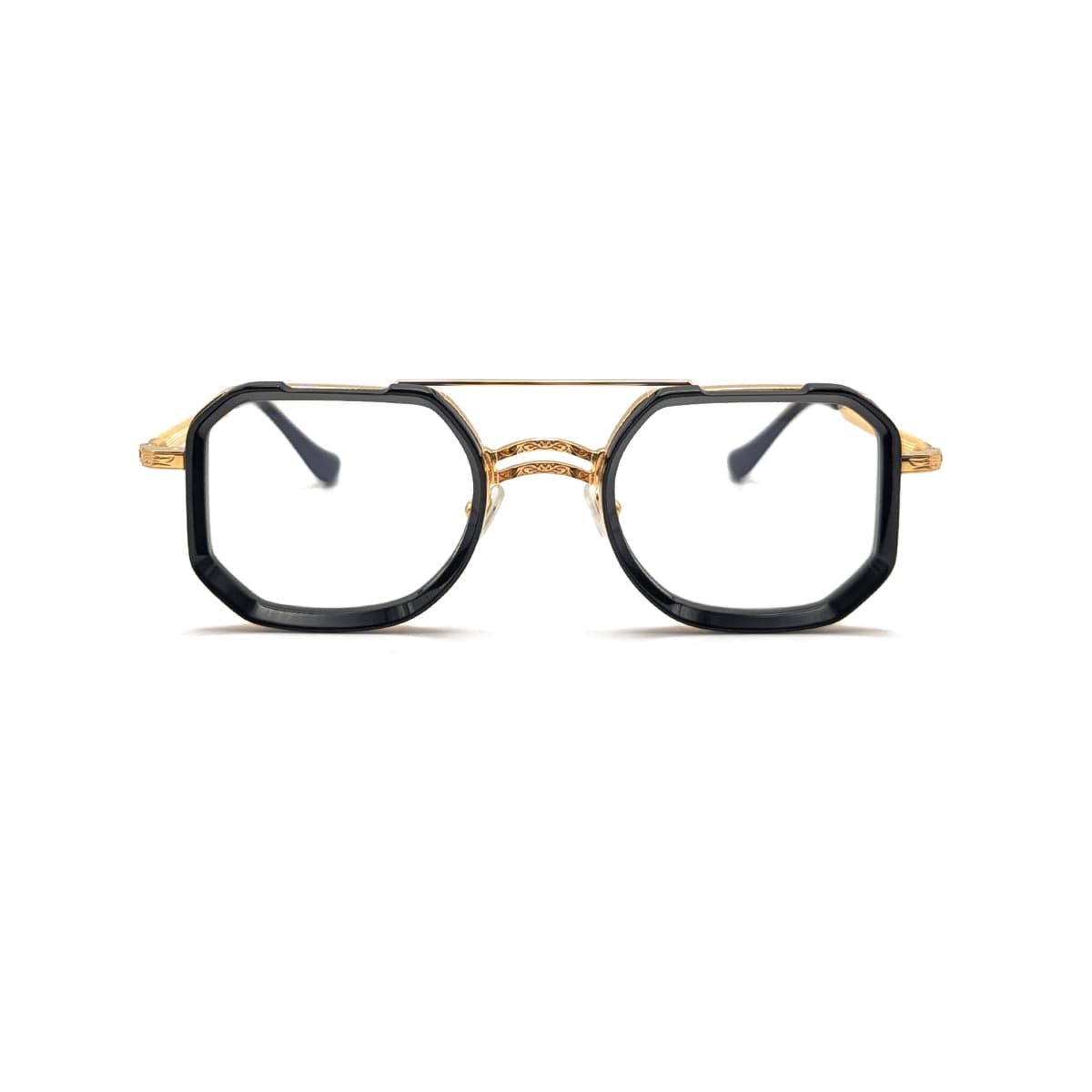
Most luxury eyewear brands are defined by a single city — Aarhus for Lindberg, Los Angeles for Jacques Marie Mage, Toulouse for Anne et Valentin. Gazal Eyewear is different. It's Roswell, Georgia — working in the same category of premium Italian acetate used across independent luxury eyewear (we're not naming a specific mill for Gazal's own supply chain until it's independently confirmed). The proportions are tested on Southern faces but drawn with European line. This is how that combination actually works.
I'll declare my bias up front: this is my brand. I fit Gazal frames on patients at Gazal Eyecare five days a week, and the design feedback loop between the clinic and the drawing board is something I've lived for fifteen years. So this isn't a distant review. It's a practitioner's account of how a small independent crosses the gap between Italian sourcing and American faces — and why that gap is bigger than most wearers realize.
Quick Answer — what Gazal is, in 2026
Gazal Eyewear is an American independent eyewear brand designed in Roswell, Georgia and produced from premium Italian acetate (plus titanium for select models). Retail runs $400-$1,200. The brand's thesis: premium Italian material, clean European line, fit cut for actual American face geometry. The 2025 Wicked collection pushed the brand past safe tortoise into bold saturated color. The 2026 expansion added wider-bridge sizing across the core line.
The Italian material story
Every Gazal acetate frame starts with premium Italian acetate. We're deliberately not naming a specific mill here — Mazzucchelli 1849, the well-known Italian family-owned mill in Castiglione Olona (founded 1849, so 175+ years in business as of its own 2024 anniversary), is a real, widely-used supplier in the eyewear trade and a confirmed source for Jacques Marie Mage specifically, but we haven't independently verified that Gazal's own acetate comes from that exact mill, so we're not asserting it as fact. ("80% market share" style figures for Mazzucchelli that circulate online don't trace to any real source either — we're not repeating that number for any brand.)
The honest version of the story: the block matters more than the country of assembly. What makes Italian acetate Italian is the material itself — the layering, the color depth, the way the plant-based cellulose actually takes polish. The difference between mills mostly shows up at the finishing stage — hand-polishing, tumbling, and edge detailing.
Gazal splits this deliberately. Acetate is premium Italian material. Core frame cutting and finishing happens through established Italian workshop partners. Final quality control, fit adjustment, and distribution run from Roswell. We don't claim everything is "made in Italy start to finish" because that claim, for any brand in our tier, is usually overstated. We say Italian acetate, European production partners, American design and fitting. That's what's actually true.
The clinic-to-design feedback loop
Here's the part that sounds obvious but almost no eyewear brand actually does. I fit patients. Every design we release has been on a patient's face before it went into production.
A typical cycle: we draft a shape, cut a handful of prototype frames, and I wear them in the clinic for two weeks. Then I ask three or four patients with different face shapes to try them during their exam — wide bridge, narrow bridge, high cheekbones, low cheekbones. I take notes. Then we send the prototypes back with real-world data: the bridge sits 1mm too low on round faces, the temples splay after 4 hours of wear, the lens opening crops the lower orbit too aggressively on taller faces.
This is why Gazal proportions feel wearable. Not because I'm a better designer than the teams at Anne et Valentin or JMM — I'm not. It's because I'm fitting patients five days a week and those patients tell me exactly what's wrong before the frame gets to market. Editorial brands rely on design meetings. We rely on exam chairs.
Honestly, this is also the controversial take: Gazal is what European independents would look like if they designed for the actual American face instead of the European one. That's a bigger gap than most wearers realize — and it's why Gazal has filled it quickly.
The Wicked collection — past safe tortoise
The 2025 Wicked collection is the clearest example of where Gazal's color philosophy lives now. Three tortoise variants, each genuinely distinct:
- Cognac-amber — warm, almost honey-toned, translucent.
- Smoked-green — mossy depth with olive undertones, visible layering under light.
- Oxblood — deep red-brown, closer to aged bourbon barrel than traditional dark tortoise.
Plus a saturated cobalt and a translucent amber in the same silhouette, at the acetate end of the brand's $400-$1,200 range.
What makes Wicked matter for the brand's trajectory: it moved Gazal out of the "nice Southern acetate brand with one tortoise option" framing. Three tortoises in the same release, each genuinely differentiated, is a statement. It's also something that requires real material depth — the color layering that makes each variant read as its own frame rather than three shades of brown is a hallmark of quality Italian acetate.
The 2026 wider-bridge expansion
This is the quiet story that matters most clinically. Starting in early 2026, the core Gazal line ships in two bridge widths: standard (16-17mm) and wide (19-20mm). The wide version runs 2-3mm broader than typical European independent geometry.
Why this matters: a lot of American wearers — particularly those of European, Asian, South Asian, or mixed heritage — have wider nasal bridges than the European design average assumes. Lindberg's Air Titanium Rim, to take the obvious example, cuts to European standard. On a patient with a broader bridge, even a beautifully-made European frame slides forward during the day because the bridge doesn't actually hug the anatomy.
We see this constantly at the clinic. A patient loves a European independent, buys it, comes back in four months asking why it doesn't sit right. The answer, half the time, is that the bridge was never cut for their face. Our wider-bridge option closes that gap without looking like a correction — the silhouette stays clean, the temples stay proportional, but the fit is honest.
Gazal vs Anne et Valentin vs Jacques Marie Mage
| Attribute | Gazal Eyewear | Anne et Valentin | Jacques Marie Mage |
|---|---|---|---|
| Country of origin | Roswell, Georgia (USA) | Toulouse, France | Los Angeles, USA |
| Acetate source | Italian acetate (mill unconfirmed) | Italian acetate (mill unconfirmed) | Mazzucchelli (Italy) — confirmed |
| Price range | $400-$1,200 | $385-$715 | $985-$1,385 core; limited $2,000+ |
| Design voice | Clean Southern line, bold color, wearable | Architectural, avant-garde, sculptural | Cinematic, Americana, vintage-inspired |
| Fit profile | Wide-bridge options cut for American faces | Narrow French geometry | Mid-width, longer temples |
All three brands work in premium Italian acetate. The differentiation is design voice and fit geometry — and price. Gazal sits below Jacques Marie Mage because the goal is wearability at a price point where independent boutiques can actually stock depth instead of a token three-frame display.
The price tier — why Gazal's range is deliberate
Jacques Marie Mage optical starts at $985, with core models running $985-$1,385 and limited editions past $2,000. That tier exists for a reason — small production runs, Italian labor, independent design overhead. But it also means independent eyewear has priced itself out of most everyday buyers who'd otherwise choose independent over mass-market.
Gazal's $400-$1,200 range is intentional, and it undercuts JMM's floor meaningfully. The brand operates with lower overhead than French or Italian independents because the design, QC, and distribution work happen in Georgia rather than in a European fashion capital. The material quality is real Italian acetate regardless of the specific mill — but the per-frame cost structure is lighter.
For buyers, this means: Italian acetate, independent-brand design attention, patient-tested fit, at a price that still makes sense if you're not spending JMM money. It's the single best value in independent acetate right now, and I'll defend that claim without much hedging.
Why boutiques outside Georgia started carrying Gazal
A handful of boutique opticians outside Georgia carry the line:
- Blinka Optical in Geneva, Illinois — Chicago-area rotation including Wicked colorways.
- Bixby Eye Center in Peoria, Illinois — central Illinois rotation, wider-bridge options.
- Specs Around Town (Illinois) — selective Wicked and core line pieces.
- EYES of Cleveland (Tennessee) — Gazal's first Tennessee placement.
The pattern is consistent: mid-size boutique opticians whose patients want independent design but can't justify Jacques Marie Mage-level prices. Gazal fills that exact gap, and the fit story — wider bridges, longer temples, clinical rigor — resonates with opticians who actually fit frames rather than just displaying them.
Where to try Gazal Eyewear
Gazal Eyewear is deliberately distributed through independent boutique opticals rather than chain optical. The best fitting experience remains Gazal Eyecare in Roswell, Georgia — the full Wicked collection, both bridge widths, titanium models, and direct fitting input from the design team.
Outside Georgia, Blinka Optical in Geneva, Illinois and Bixby Eye Center in Peoria, Illinois carry rotating Gazal inventory. The designer page at /designers/gazal-eyewear lists current collections and available colorways.
For related reading, the earlier post on Gazal Eyewear's bold color and Southern craftsmanship covers the brand's origin story, and the craftsmanship behind Gazal Eyewear digs into the material and construction detail. If you're comparison-shopping, the Anne et Valentin spotlight and the /designers/anne-et-valentin page are the most directly relevant comparison.
The bottom line
Gazal Eyewear is the rare independent acetate brand that treats material honesty, European design line, and American fit geometry as equally weighted priorities. The acetate is Italian. The design voice is clean and wearable. The fit is clinic-tested. The price tier is reachable. And the 2025-2026 expansion — Wicked colorways, wider-bridge sizing, out-of-state boutique placement — has turned what used to be a regional brand into something boutique opticians recommend across state lines.
If you've been looking for an independent acetate frame that doesn't require $800+ and still delivers genuine material quality and real design attention, this is the brand to try. Find a boutique near you and plan a fitting afternoon. Bring the frames you already own — half the conversation will be about why they don't sit the way they should.
Frequently Asked Questions
What makes Gazal Eyewear different from other independent acetate brands?
Gazal sits at the intersection of Italian materials and American face geometry. The acetate is premium Italian material, the design voice is clean and European, but the bridges and temple lengths are cut for wider American faces. Most European independents design for European skulls. Gazal's clinical fitting loop — designs tested on real patients at Gazal Eyecare — makes the fit honest.
Where is Gazal Eyewear actually made?
Acetate is premium Italian material (we're not naming a specific mill for Gazal's own supply chain until it's independently confirmed). Final assembly and finishing happen through a combination of Italian workshop partners and quality control overseen from Roswell, Georgia. The brand is deliberately transparent about its supply chain rather than implying everything is hand-cut in Italy from start to finish.
How does Gazal compare to Anne et Valentin?
Both use Italian acetate and prioritize colorways beyond standard black and tortoise. Anne et Valentin leans more architectural and runs roughly $385-$715. Gazal runs $400-$1,200 with a cleaner, less avant-garde line. Gazal also fits wider faces better — Anne et Valentin's French-cut geometry is narrow at the bridge for a lot of American wearers.
What is the Wicked collection?
Wicked is Gazal's 2025 acetate capsule. Three hero tortoise variants — cognac-amber, smoked-green, and oxblood — plus a saturated cobalt and a translucent amber. It's the collection that pushed Gazal past safe tortoise into the bold-color territory the brand is now known for, sitting at the acetate end of the brand's $400-$1,200 range.
Why are opticians outside Georgia starting to carry Gazal?
Three reasons: the price tier ($400-$1,200) fills a real hole between mass-market acetate and the highest-end independents, the fit accommodates wider American faces, and the Italian material story is honest. Boutiques in Illinois and Tennessee carry Gazal because their patients want independent design without Jacques Marie Mage's $985-and-up price tags.
Where can I try Gazal Eyewear in person?
Gazal Eyecare in Roswell, Georgia is the flagship fitting location. As of 2026, Blinka Optical in Geneva IL, Bixby Eye Center in Peoria IL, Specs Around Town (IL), and EYES of Cleveland (TN) carry rotating stock. The [boutique practice locator](/boutique-practice-locator) lists authorized dealers.
Newsletter
Independent eyewear, in your inbox
Monthly stories on the world's finest independent eyewear brands and boutiques.
Related Reading
The Craftsmanship Behind Gazal Eyewear — From Design to Frame
Discover how Gazal Eyewear blends Italian acetate, thoughtful design, and Georgia roots into frames that stand apart from mass-produced eyewear.
Gazal Eyewear: Where Bold Color Meets Southern Craftsmanship
Discover how this Georgia-based independent brand brings vibrant design and premium materials to the luxury eyewear scene.
Kuboraum Spotlight — The Berlin Mask Eyewear Made by Hand in Italy
Kuboraum turns eyewear into sculpture — thick, oversized acetate "masks" dreamed up in Berlin and hand-finished in a small workshop in northeastern Italy. Here's the real story, not the marketing gloss.
Comments
0 comments · moderated
No comments yet. Be the first to weigh in.