The first time I ordered a blue-flash mirror on a gold-tone aviator, I thought I'd ruined the frame. Six weeks later I'd ordered two more pairs. Here's why mirror coatings are wildly underused at boutique opticals — and what actually flatters who.
Quick Answer — what a mirror coating actually is
A mirror coating is a thin metallic layer deposited onto the outer surface of a sunglass lens. It reflects part of the incoming light depending on density — a light "flash" mirror on the low end, a full opaque mirror on the high end. The part most wearers (and honestly a lot of opticians) get wrong: the mirror itself does not darken the lens. It just bounces a portion of light back out. The actual shading comes from the base tint underneath, which is almost always grey, brown, or green. Mirror plus tint equals the finished look. Mirror alone on a clear lens would be dystopian.
So when you're specifying a mirrored sunglass, you're making two decisions, not one. Base tint first. Flash color second.
Flash mirror versus full mirror — the density spectrum
Flash mirrors are the subtle end. Think a hint of color on the lens surface, with the wearer's eyes still partially visible from outside. This is where most boutique sunglass work lives — it's elegant, it photographs well, and it doesn't scream.
Full mirrors sit at the opposite end. Opaque-looking from outside, high reflectance, eyes essentially invisible to anyone looking at you. This is classic ski-goggle territory, plus a certain late-90s fashion revival that keeps threatening to come back. Full mirrors on a daily city sunglass tend to read as costume. Flash mirrors don't.
For most lifestyle wear, flash is the right call. Full mirror for sport, snow, or deliberate fashion statement only.
Colors and who they flatter
This is where the decision gets personal. Mirror color interacts with skin undertone, frame color, and the overall aesthetic you're going for. Here's what actually works.
Silver flash is the safest default. It reads as cool-toned, pairs with every frame color on the market, and flatters pink, red, and blue skin undertones especially well. If you have no idea what flash color to pick, silver on a grey base is the universal answer.
Gold flash is warmth in lens form. It flatters yellow and olive skin undertones and pairs beautifully with tortoise, honey, amber, and warm metal frames. A gold-flash on a thick honey acetate frame is one of the most photogenic combinations in eyewear, full stop. On the wrong frame (a cool silver wire, say), gold flash fights the frame.
Blue flash is the trickiest of the group. It reads neutral-to-cool, works best on black, navy, gunmetal, or dark gradient frames, and carries a tech-forward or futurist read. On a warm tortoise, blue flash looks out of place. On a matte black JMM-style acetate? Transformative.
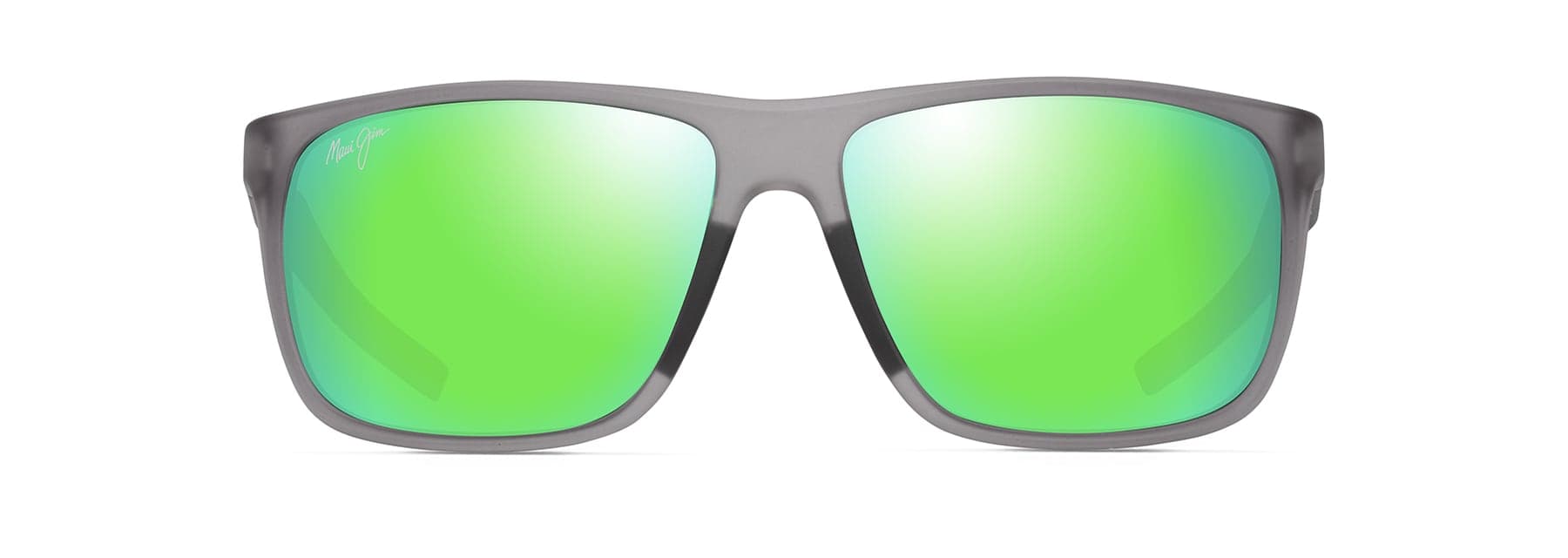
Green flash is blue's earthier sibling. Warmer, more natural-looking in photos, pairs with olive, bronze, and deep-green frame colors. This is the flash color for people who like the mirror idea but want it to feel outdoorsy rather than architectural.
Rose or pink flash is controversial. You either love it or you don't. It flatters warm-neutral skin, pairs with clear or crystal acetate frames, and reads as distinctly fashion-forward. I've sold rose-flash sunglasses to two types of customers — people who immediately said yes in the mirror, and people who circled back three weeks later and asked for the same pair.
Purple or violet flash is the high-fashion pick. It works on cool skin, pairs with silver or black frames, and is almost never the right answer for a first mirrored sunglass. But as a second pair, for someone who already has a silver-flash workhorse — it's fantastic.
Comparison table — the decision grid
| Flash Color | Skin Tone Match | Best Frame Pairings | Activity Fit |
|---|---|---|---|
| Silver | Cool (pink/red/blue undertones) | Any color, any material | Urban, daily, professional |
| Gold | Warm (yellow/olive undertones) | Tortoise, honey, amber, warm metal | Lifestyle, coffee-shop glam |
| Blue | Neutral to cool | Black, navy, gunmetal, matte acetate | Urban, tech, fashion-forward |
| Green | Warm to neutral | Olive, bronze, deep green, natural tortoise | Outdoor — golf, water, driving |
| Rose/Pink | Warm-neutral | Clear, crystal, light acetate | Fashion-forward, daytime social |
| Purple/Violet | Cool | Silver, black, architectural metal | High-fashion second pair |
Activity mapping — when each flash actually earns its keep
Silver and blue flash belong in urban environments. They reduce visible eye contact in a way that reads as stylish rather than aggressive, and they pair well with the neutral frame colors most people wear in city life.
Green and brown-base flash (green-on-brown is a specific combo worth asking for) are the outdoor picks. Golf, boating, driving, hiking — green flash on a brown base is what Maui Jim and Costa both use extensively for a reason. Honestly, Maui Jim does the best gray-green mirrors in lifestyle sunglasses. They look natural in photos, which matters to a lot of people more than they'll admit.
Gold flash is pure lifestyle. Not sport, not high-performance, just "I want to look good at brunch." Nothing wrong with that. A gold-flash on a warm acetate is one of the easiest style wins in eyewear.
The durability reality nobody mentions
Mirror coatings scratch more easily than plain AR. This is just physics — the reflective layer sits on the outer lens surface, exposed to every fingernail, jacket pocket, and car-console drop. Expect a two to three year useful life on a daily-wear mirror before visible scratching starts to show. That's shorter than a plain polarized lens would last in the same conditions.
You can extend it. Microfiber only — never a shirt hem, never a paper towel. Clean with actual lens cleaner, not tap water plus whatever. Store in a hard case, not loose in a bag. And accept that on a four- or five-year horizon, the lenses will probably need recoating or the sunglass will cycle out.
The cost: around $150 surcharge over base sun lens pricing at most boutique opticals. Specialty colors (rose, violet) sometimes carry a further premium; standard silver, gold, and blue usually do not.
For pairing recommendations that extend beyond mirror coatings into base tint choice, our lens tint pairing guide covers frame-by-frame tint logic. And if you're still figuring out which frame colors suit your complexion in the first place, the color theory in eyewear guide is the place to start.
Where to try mirrored lenses in person
Mirror choice is almost impossible to get right from a photo on a website. The reflection behavior, the interaction with your face, the way the flash shifts in different lighting — it's an in-person decision.
- Gazal Eyecare in Roswell, Georgia — custom mirror coatings via Zeiss and Essilor lab partnerships, strong selection of flash options.
- Framed Ewe in Los Angeles, California — specialty in fashion-forward mirror flashes and independent acetate work.
- Edward Beiner in Miami, Florida — deep Maui Jim and lifestyle mirror selection, Miami sun put to use.
For specific Maui Jim mirror work on lifestyle and outdoor frames, our Maui Jim designer page covers polarized mirror specifics.
The bottom line
Mirror coatings are not a gimmick. They are a legitimate style and performance layer that too few boutique customers even know is an option. Silver flash is the safe workhorse. Gold flash is the warm-skin winner. Blue, green, rose, and violet are specialty picks worth trying in person, ideally on a second or third pair rather than your daily driver. Budget around $150 for the upcharge, accept the two-to-three-year useful life, and pick the flash that matches both your undertone and your actual daily environment.
Ready to see flash colors in person on real frames? Find a boutique that takes lens finishing as seriously as frame selection.
Frequently Asked Questions
Does a mirror coating make the lens darker?
No — and this is the part almost everyone gets wrong. The mirror is a thin reflective layer on the outside of the lens. It bounces part of the incoming light away depending on density, but it does not darken the lens itself. The shading comes from the base tint underneath, usually grey, brown, or green.
Which mirror flash color is most flattering on most people?
Silver flash is the safest default. It works with cool and neutral skin tones, pairs with any frame color (black, tortoise, gold, silver, clear), and doesn't read as trendy. Gold flash is a close second for warm-toned skin — especially on tortoise or honey acetate. Blue and rose are polarizing in both senses of the word.
How long do mirror coatings last before scratching?
Expect two to three years of useful life on a daily-wear mirror before scratching becomes visible. Mirror coatings sit on the outer lens surface, which makes them more exposed than interior AR coatings and meaningfully less scratch-resistant than plain polarized or tinted lenses. Clean with microfiber only, never shirt fabric.
What does a mirror coating cost to add at a boutique optical?
Typically around $150 on top of the base sun lens price, depending on color and whether the frame requires custom lab work. Specialty colors like violet or rose sometimes carry a further premium; standard silver, gold, and blue usually do not.
Are mirror coatings just cosmetic or do they actually reduce glare?
Both, but mostly cosmetic. The reflective layer does reduce overall light transmission, which helps in very bright environments like snow, open water, or high-altitude driving. But for glare specifically — the reflected light off horizontal surfaces — polarization does more work than a mirror coating. Ideally, you pair them.
Newsletter
Independent eyewear, in your inbox
Monthly stories on the world's finest independent eyewear brands and boutiques.
Related Reading
Flash Mirror vs Solid Mirror Sunglass Lenses — Which Reflectance Level Suits Your Life
Flash mirrors reflect a small share of light with eyes partially visible; solid (full) mirrors reflect much more and hide the eyes. Choosing between them comes down to activity, setting, and how much eye privacy you want.
Lens Tint Pairing Guide: Colors, Density & Frame Styles
Match lens tint color and VLT density to your frame style. Grey for driving, brown for contrast, green for titanium. Complete guide with brand pairings.
Best Luxury Sunglasses Brands of 2026: Lens-First Picks
The best luxury sunglasses brands for 2026, chosen lens first: Maui Jim for polarized glare control, Jacques Marie Mage and Akoni for frames, plus tint and VLT basics.
Comments
0 comments · moderated
No comments yet. Be the first to weigh in.