Quick Answer — reflectance density as a lifestyle decision
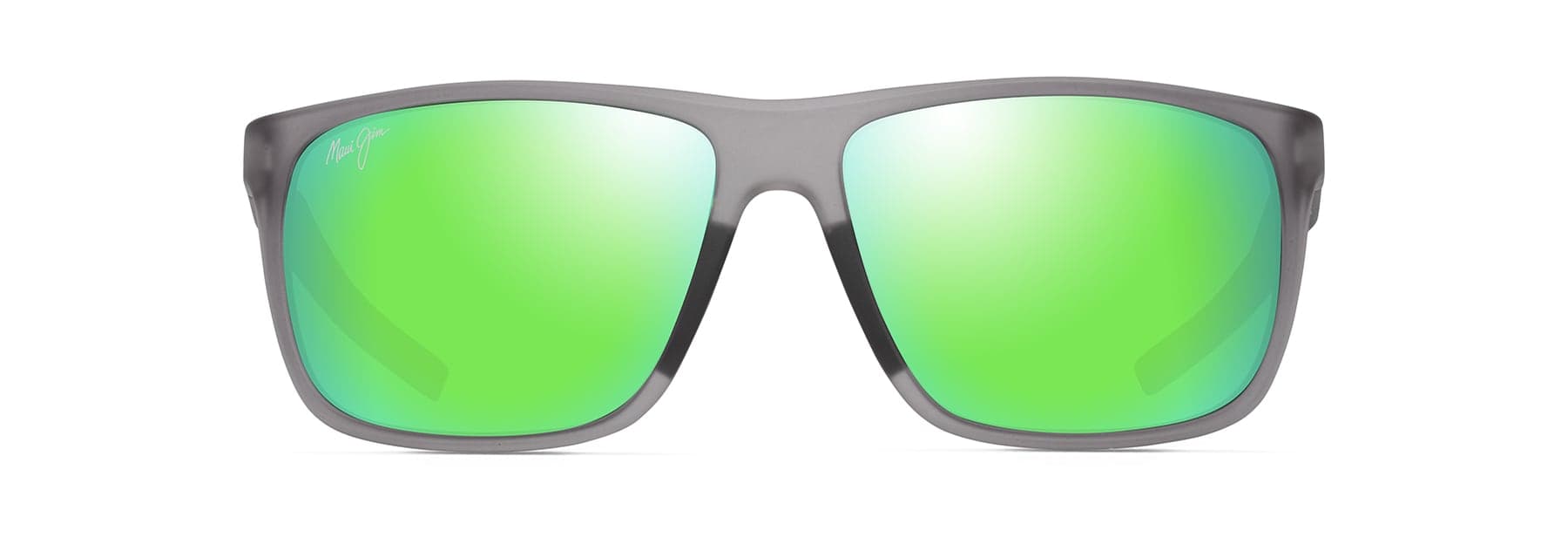
A mirror coating's reflectance — how much light bounces back rather than passing through — determines how the lens looks and functions day to day. Flash mirrors bounce back enough light to be visually interesting while letting most light, and your eyes, show through. Solid mirrors reflect enough that eyes become silhouettes or disappear, which creates a privacy effect and a bolder look.
The choice isn't really about optical performance — both densities reduce glare and brightness at similar base-tint levels. It's a behavioral and contextual choice. Flash mirrors read as style-conscious without being loud. Solid mirrors read as performance gear or a deliberate statement. Which one fits depends on what your daily life actually looks like.
Flash Mirrors — the everyday choice
Flash mirrors sit at the lower end of the reflectance range. Light bounces back, but most of it passes through, so your eyes stay visible from outside, at least as a soft reflection.
This is the more common mirror type in boutique optical because it's versatile. Flash mirrors on a gray base look classic. On a brown base they look warm. On a gold-tone frame they're some of the most wearable eyewear finishes available. They tend to photograph well — the reflection catches light while the eyes stay visible, which reads as polished rather than technical.
Flash mirrors suit urban life, professional contexts, and anyone who values approachability over maximum eye privacy. Pricing varies by lab, with specialty colors sometimes costing more.
The durability trade-off is real: flash mirrors scratch more easily than unmirrored lenses because the reflective layer sits on the outer surface, exposed to every fingernail and pocket drop. Expect roughly 2-3 years on daily wear before scratching becomes visible, and clean with microfiber only — never shirt fabric or paper towels.
Solid Mirrors — the performance and statement choice
Solid (also called full) mirrors reflect far more light. Much more of it bounces back, so eyes read as opaque silhouettes or disappear entirely depending on the angle and ambient light. From the outside, the overall look is a solid reflective surface rather than a tinted lens with a hint of shine.
Solid mirrors are built for outdoor performance contexts: skiing in bright snow glare, boating or fishing on open water, and high-altitude activity where UV and reflected light are both intense. Outside those contexts, a solid mirror is a fashion choice — and a noticeable one. Wearing one to a restaurant or office reads as a deliberate style statement rather than a quiet accessory decision.
Pricing varies by lab, with color-shifting or iridescent solid finishes often costing more given the more elaborate coating process. Durability is in the same general ballpark as flash mirrors — both are more fragile than unmirrored lenses because the reflective layer sits on the outer surface, and roughly 2-3 years is a reasonable expectation on daily wear for either.
The visibility factor — photography and social dynamics
Flash mirrors tend to photograph more flatteringly, since eyes stay visible or semi-visible and the look reads as polished rather than opaque. Solid mirrors photograph as reflective discs — a look some people choose deliberately and others find reads as more anonymous than approachable.
In social settings, flash mirrors let the wearer appear engaged (eyes visible) while still getting sun protection. Solid mirrors create more distance, by design. Neither is wrong — they suit different moods and occasions.
Activity mapping — which density for what life
Flash mirrors fit: daily urban wear, coffee shops, offices where eyewear is appropriate, professional contexts, casual outdoor life, any setting where approachability matters.
Solid mirrors fit: skiing and snow sports, high-altitude trekking, boating and fishing, swimming or beach statement wear, nightlife or festival settings, and any outdoor context intense enough to justify full-coverage reflectance.
The color multiplier
Mirror color interacts differently depending on density. A rose flash mirror on a light acetate frame reads as subtle and flattering; the same rose tone as a solid mirror reads as bolder and more fashion-forward. A gold flash on a tortoise frame reads as approachable; a gold solid mirror on the same frame reads as high-gloss performance gear.
For color guidance on which shades flatter which skin tones, see our Mirror Coatings Explained guide.
Durability reality — both are more fragile than unmirrored lenses
Mirror coatings need more careful handling than plain AR or polarized lenses, because the reflective metallic layer sits on the lens surface rather than underneath it. That applies to flash and solid mirrors alike — thickness doesn't meaningfully change the exposure the outer layer faces.
Extend the lifespan with a hard case, microfiber-only cleaning, and realistic expectations: on a longer horizon, mirrored lenses will likely need recoating or replacement sooner than an unmirrored pair. That's the trade-off for the visual effect mirrors provide.
Where to get them right
Mirror choice is worth trying in person — how a mirror reflects on your face, under your skin tone, in actual light, is hard to judge from a photo. Gazal Eyecare in Roswell, Georgia is one place to start that conversation.
For frame pairing guidance beyond mirrors, see Titanium vs Acetate Frames and Color Theory in Eyewear. For fixed, non-mirrored tint choices, the Lens Tint Pairing Guide by Frame Style covers the broader color spectrum.
Ready to try mirrors in person? Find a boutique practice near you.
The bottom line
Flash mirrors are the everyday choice: subtle, versatile, and the safer pick for daily wear and photography. Solid mirrors are the performance and statement choice: built for sport and intense outdoor light, and a deliberate look everywhere else. Pricing varies by lab, and both carry a similar roughly 2-3 year useful life. Neither lasts as long as an unmirrored lens, but for that lifespan, mirrors change how a frame looks and feels more than almost any other lens option. Choose flash for subtlety, solid for impact.
Frequently Asked Questions
Can I wear a solid mirror lens to work or casual outings without looking like I'm at a ski resort?
You can, but it reads as a fashion statement rather than a quiet choice. Solid mirrors are built for outdoor performance contexts — snow glare, open water, high-altitude sun — so wearing one to an office or a casual outing will draw more attention than a flash mirror would. Flash mirror is the lower-key choice; solid mirror is the intentional one.
Why do solid mirrors look more opaque if they're still just lens coatings?
Reflectance density. Flash mirrors reflect a modest share of light so eyes stay partly visible; solid mirrors reflect far more, so eyes read as silhouettes or disappear depending on the light. Higher reflectance means more opaque from the outside.
Is a solid mirror more scratch-resistant than a flash mirror?
Not meaningfully. Both sit in the same general durability range — mirror coatings as a category are more scratch-prone than plain AR or polarized lenses because the reflective layer sits on the outer surface. Expect roughly 2-3 years of daily wear before visible scratching on either type, and clean with microfiber only.
Which mirror type works better for photos?
Flash mirror tends to photograph more flatteringly — eyes stay visible or semi-visible, and the reflection reads as polished rather than opaque. Solid mirrors photograph as reflective discs, which some people love as a deliberate look and others find reads as anonymous rather than approachable.
Can I wear a solid mirror for everyday use if I just love how it looks?
Sure — fashion doesn't have to be purely functional. If you like the look, wear it daily. Just know the opaque eye coverage reads as a deliberate style statement rather than a subtle choice, which is the point for plenty of people.
Newsletter
Independent eyewear, in your inbox
Monthly stories on the world's finest independent eyewear brands and boutiques.
Related Reading
Mirror Flash Coatings: Colors, Durability & Face Flattery
Mirror coatings (silver, gold, blue, green, rose) reflect part of the incoming light and last 2–3 years. Which flash color flatters your skin tone and frame.
Lens Tint Pairing Guide: Colors, Density & Frame Styles
Match lens tint color and VLT density to your frame style. Grey for driving, brown for contrast, green for titanium. Complete guide with brand pairings.
Best Luxury Sunglasses Brands of 2026: Lens-First Picks
The best luxury sunglasses brands for 2026, chosen lens first: Maui Jim for polarized glare control, Jacques Marie Mage and Akoni for frames, plus tint and VLT basics.
Comments
0 comments · moderated
No comments yet. Be the first to weigh in.